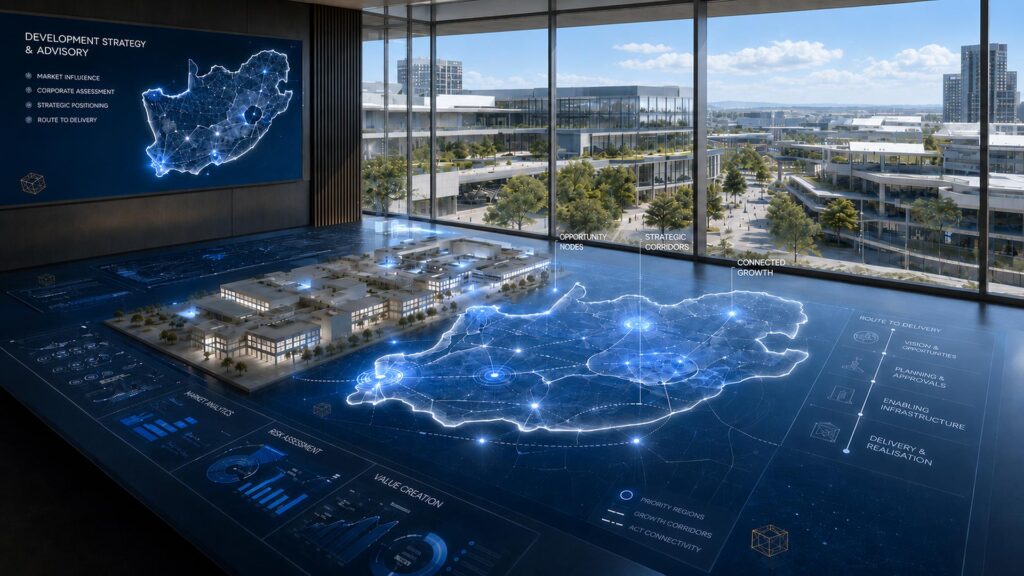
Strategic guidance across the early stages of a development opportunity, including vision-setting, site and market assessment, constraint identification, commercial positioning, and the establishment of a clear route to delivery
Rubik Design Forge supports clients at the earliest stages of a development opportunity, where strategic decisions shape commercial viability, project direction, and long-term asset performance.
Our advisory approach helps define the development vision, assess potential, identify constraints, and establish a practical route forward aligned with both commercial objectives and delivery realities.
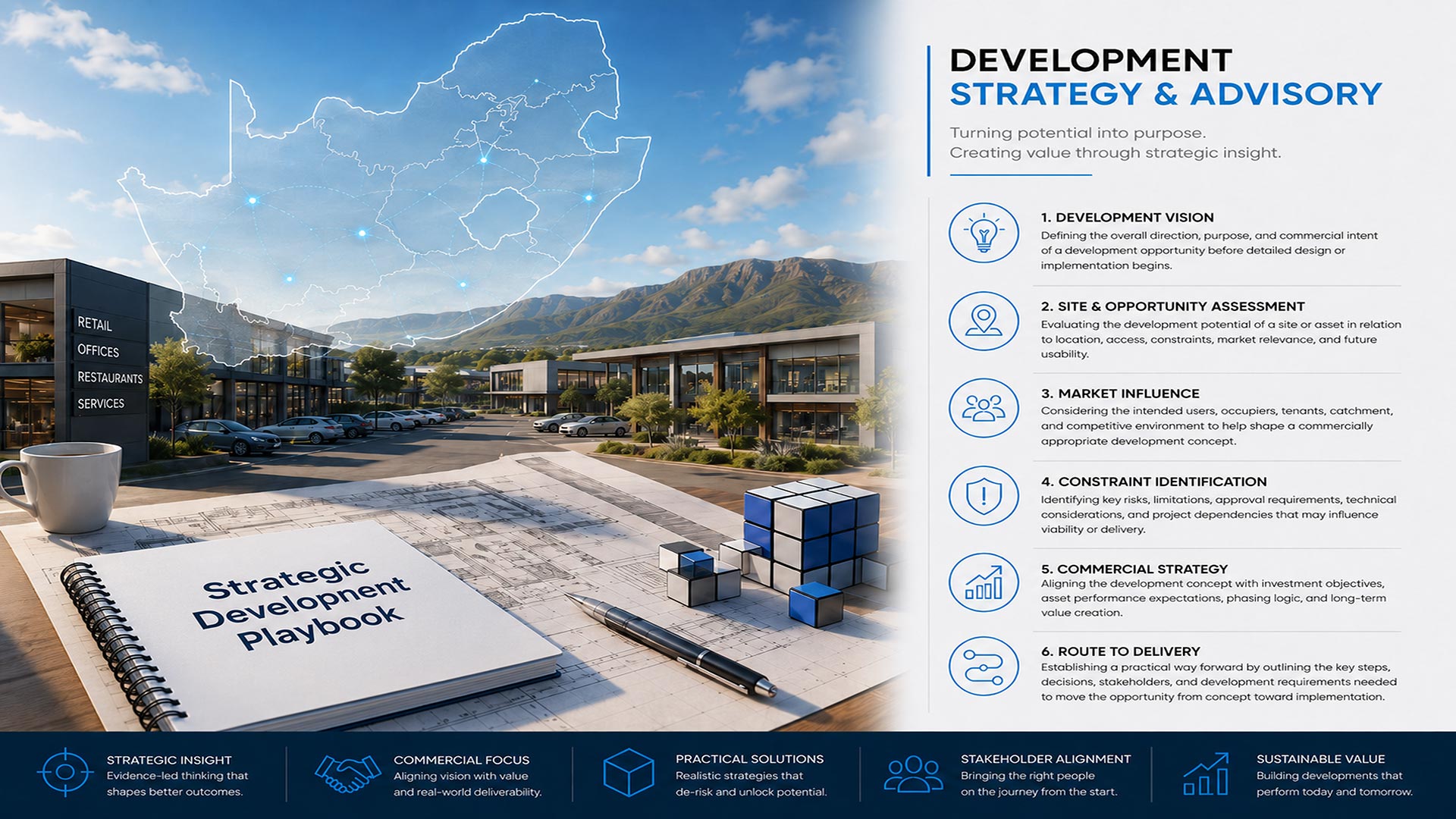
DEVELOPMENT VISION
Defining the overall direction, purpose, and commercial intent of a development opportunity before detailed design or implementation begins.
This ensures that early project decisions are guided by a clear understanding of the intended outcome, target market, and long-term asset value.
SITE & OPPORTUNITY ASSESSMENT
Evaluating the development potential of a site or asset in relation to location, access, constraints, market relevance, and future usability.
This assessment helps determine whether an opportunity is appropriately positioned to support a viable and commercially relevant development.
MARKETING & POSITIONING INPUT
Considering the intended users, occupiers, tenants, catchment, and competitive environment to help shape a commercially appropriate development concept.
This input ensures that the project is aligned with market demand, user expectations, and the broader context in which the asset will operate.
CONSTRAINT IDENTIFICATION
Identifying key risks, limitations, approval requirements, technical considerations, and project dependencies that may influence viability or delivery.
By recognising these factors early, RDF helps clients make informed decisions and reduce uncertainty before progressing into detailed development stages.
COMMERCIAL STRATEGY
Aligning the development concept with investment objectives, asset performance expectations, phasing logic, and long-term value creation.
This ensures that the strategic direction of the project is commercially grounded and capable of supporting sustainable development outcomes.
ROUTE TO DELIVERY
Establishing a practical way forward by outlining the key steps, decisions, stakeholders, and development requirements needed to move the opportunity from concept toward implementation.
This creates a structured pathway that connects early-stage strategy with realistic project delivery.